
ERT1 is one of the main television channels operated by the Hellenic Broadcasting Corporation. It delivers a variety of content, including news, cultural programs, documentaries, and entertainment.
To reach a wide audience, ERT1 is broadcast multiple satellites covering EU zone, the Middle East, and other areas.
Understanding Satellite Frequency
Satellite broadcasting depends on specific technical parameters that must be correctly set on a tuner. These include frequency (in MHz), polarization (horizontal or vertical), symbol rate, and forward error correction (FEC). Each satellite uses unique values, so proper configuration is essential for successful reception.
ERT1 on Hot Bird Satellite
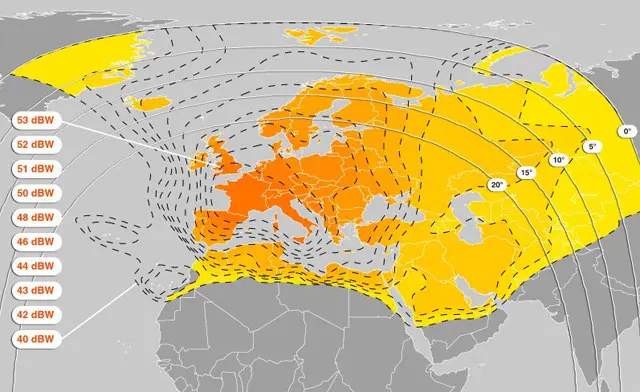
The Hot Bird satellite at 13° East is one of the most usual platforms for receiving ERT1. It provides strong coverage across EU zone, North Africa, and parts of the Middle East.
Typical transmission setup include:
- Frequency: 12169 MHz
- Polarization: Horizontal
- Symbol Rate: 27500
This satellite is widely used due to its reliable signal and accessibility.
ERT1 on Eutelsat Satellites
ERT1 might also be available on Eutelsat satellites, such as Eutelsat 3B located at 3° East. These satellites offer secondary coverage and might be useful for viewers in areas where other signals are weaker.
Frequencies on Eutelsat satellites can vary, so users should consistently check updated information or perform automatic scans to locate the channel.
Free-to-Air and Encrypted Broadcasts
ERT1 is often broadcast as a free-to-broadcast channel, allowing viewers to watch it without a subscription. However, some transmissions might be encrypted for specific areas or professional use. Accessing encrypted channels demands proper authorization and compatible equipment.
Reasons for Frequency Changes
Satellite frequencies are subject to modify for several causes, including:
- Enhancing signal quality
- Optimizing bandwidth usage
- Switching satellites
- Performing technical upgrades
Regular updates ensure viewers maintain continuous availability.
Tips for Reliable Reception
To receive ERT1 successfully, viewers should:
- Properly align their satellite dish
- Enter accurate frequency information
- Perform periodic channel scans
- Stay informed through reliable satellite update sources
How to Use Signal Meters Professionally
- Use meters to accurately measure signal strength and quality.
- Check both transponder power and signal-to-noise ratio (SNR).
- Fine-tune dish alignment using the readings for optimal reception.
- Document measurements to track signal performance over time.






The guide is clear, but I still don’t understand FEC setting honestly 😅
Everything worked fine, but signal drops sometimes… maybe weather?